Engineering · prepare and refine
Create the system, tune behaviour, define scenarios and deliver the prepared project.
Our mission is to help HVAC engineers turn practical knowledge of real equipment into repeatable tests of external control systems.
ModbusSim is a Windows HVAC system simulation and test platform. Engineers prepare equipment behaviour, system design, I/O functions and test scenarios, connect an external PLC or chiller controller over Modbus TCP or RTU, and inspect the resulting response.
For HVAC and refrigeration engineers, chiller-control developers, PLC programmers and validation teams.
An experienced engineer recognizes how a machine loads, unloads, recovers or approaches a fault. Visual behaviour editing provides a practical way to prepare those conditions and refine compressor response using engineering knowledge and recorded observations.
The same nominal cooling capacity can serve different entering water temperatures (EWT) and leaving water temperatures (LWT). Preserve the behaviour prepared for those conditions with the project. Capacity and water-temperature definitions alone do not automatically calibrate compressor pressure behaviour.
Read the compressor behaviour guide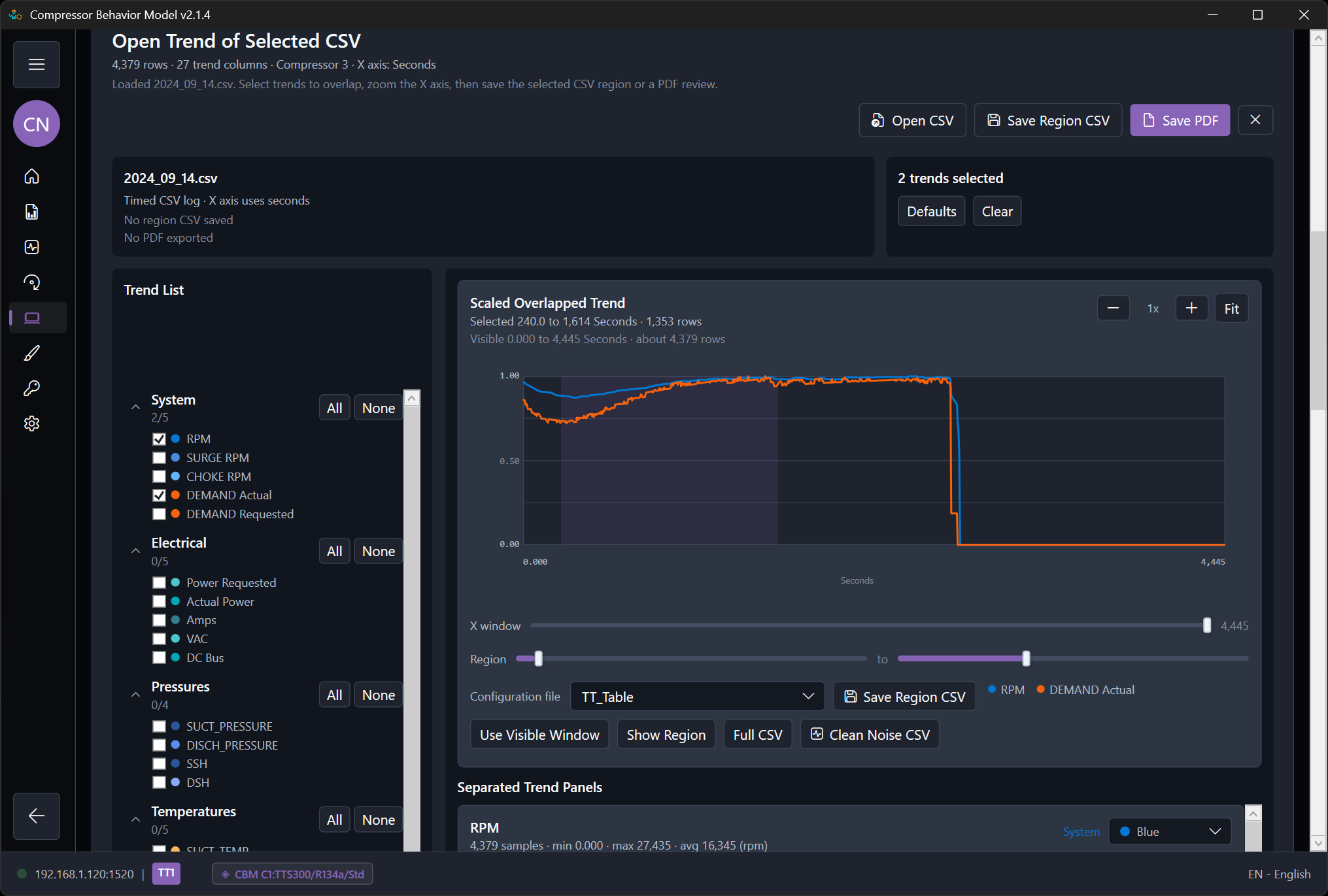
The .modbussim project is the core of the workflow: system design, selected compressor behaviour, I/O functions and the Plant Test scenario travel together. Keep associated test plans and run evidence with the project.
Create the system, tune behaviour, define scenarios and deliver the prepared project.
Run prepared projects against external controllers, inspect trends and retain evidence with system preparation read-only.
For meaningful comparisons, identify the project revision, controller program and settings, starting conditions and scenario. Review computer-specific network and serial connections after transfer.
Explore project preparationDischarge superheat (DSH) can be important when investigating compressor protection and recovery. Prepare a scenario appropriate to the selected model, then examine the external controller’s actions and their consequences.
This is an example of test design, not a published result or a claim that every manufacturer’s internal protection is reproduced. A recorded trace can test detection and handling; evaluating regulation also requires modelled response to controller commands.
Use plant, system and Control Monitor views to inspect the relevant signals together. Retain the scenario, trends and events so another engineer can understand the observation and repeat the investigation.
Explore Plant Test and its evidence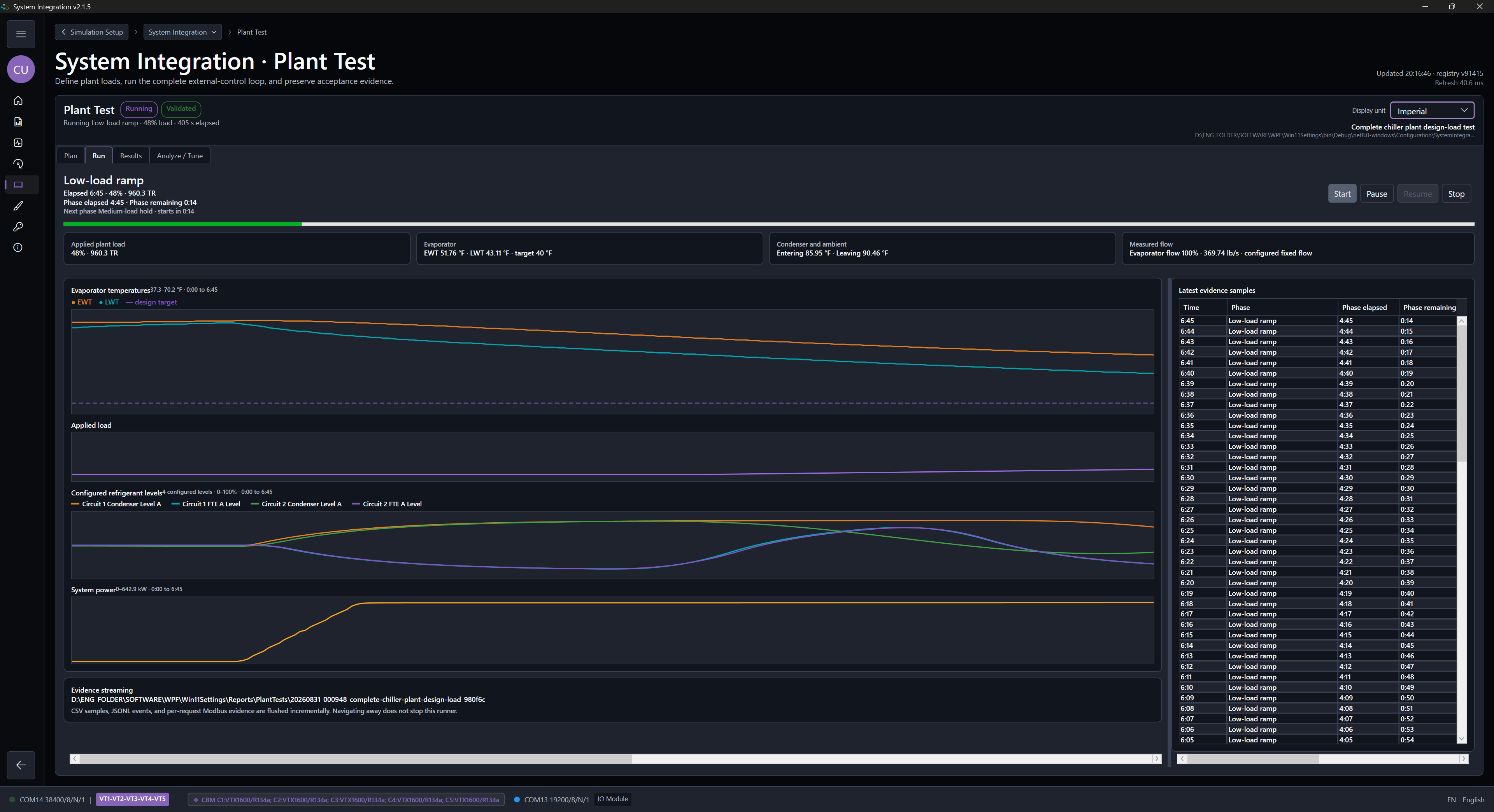
The long-term purpose is to help engineers create, evaluate and refine external control before physical testing. Simulation findings depend on the prepared model and tested conditions. The real machine and test stand remain the final validation.